Distinguished Fellow - American Psychiatric Association Fellow - International Psychoanalytical Association Fellow - American College of Psychoanalysts Professor of Clinical Psychiatry - Eastern Virginia Medical School, Norfolk, VA
Supervising and Training Analyst - NY Freudian Society, Washington DC Training Institute
Board of Directors - China American Psychoanalytic Alliance
Certified in Psychiatry - American Board of Psychiatry and Neurology Certified in Psychoanalysis - Board on Professional Standards, American Psychoanalytic Association
Private Office
Suite 204 Lynnhaven Station Building 101 North Lynnhaven Road Virginia Beach, Virginia 23452 Telephone 757-463-3000
Email - jblackmanmd@aol.com
Buy101 Defenses: How the Mind Shields Itself(published by Routledge, NY, 2003)
I have provided this website to acquaint you with my practice and to illustrate how psychoanalytic theory impacts private practice, diagnoses, different types of treatment, and everyday life.
Regarding Mental Disorders
There are essentially 2 types of disturbances in adults.
There are those caused solely by internal conflicts. And there are those caused by internal conflicts complicated by deficits in important mental functions.
Conflict-based Disorders Symptoms and Character Traits
Typical problems caused by internal conflicts include severe phobias (such as airplane, elevator, and ocean), conversion symptoms (weaknesses and pains that are not caused by physical disease), obsessions (repetitive thoughts about something or somebody), compulsions (automatically having to do something that is relatively unnecessary), panic attacks (sudden anxiety with no reality trigger), and depressions (hating oneself or experiencing irredeemable loss of a person, capacity, or other important thing).
All of these “neurotic” problems involve internal conflicts between different wishes (such as to be loved, or to retaliate), vs. guilt, shame, external reality, and other wishes; the clashes produce a range of emotions. To handle the emotions and the conflicts, people automatically institute “defense mechanisms” – like projection, denial, blaming, making excuses, and forgetting.
Psychoanalytic Treatments Usually people who suffer with these conflicts are not aware of them; analysts say the conflicts are “unconscious.” Psychoanalysts, like me, try to help people get over these problems by detecting the unconscious defenses and conflicts and bringing them to the patient’s attention. Often the conflicts have roots in other, unresolved troubles people had with their parents and siblings during different stages of childhood and adolescence. It can be useful, as well, to figure out what those were, and if they have any connection to the present dilemmas. The treatments where the analyst “interprets” unconscious findings are usually called “psychoanalytic” or “psychodynamic.” These problems were first described by Sigmund Freud (in The Ego and the Id, 1923), and later elaborated and clarified by Charles Brenner (in Psychoanalysis: Mind and Meaning, 2006).
Deficit-based Disorders Psychoses
The second group of disorders is comprised of people who, besides being plagued by internal conflicts, also suffer with deficits. We find deficits in people suffering with psychotic and near psychotic illnesses. In those situations, their conflicts are compounded by a breakdown of (or developmental delay in) organizing thinking (the “integrative” function), of abstract thinking (understanding hidden meanings and symbolism), and of judging simple realities correctly.
For people suffering with psychotic disorders, powerful psychotropic medicines (antipsychotic) are usually used. Often “supportive” therapy techniques are added, where the therapist tests reality for the patient, advises, explains, and persuades. Sometimes it is necessary to take over the everyday functioning of patients by putting them in mental hospitals for their own safety.
Borderlines
There are instances where abstraction, integration, and reality functions are okay, but people have deficits in controlling themselves. They drink too much, use drugs, eat too much, or are sexually “addicted” (deficits in impulse control). Others may have a weakness in handling powerful emotions, and become overwhelmed too easily (deficit in affect tolerance). We usually refer to such disturbances, in adults, as “borderline” conditions. Treatment of some weaknesses involves anti-anxiety and antidepressant medicines, as well as an understanding therapist who can help solve problems. Groups are also used for support.
A separate group of deficits involves capacities in relationships. Adults who “can’t commit,” for example, have weaknesses in their abilities to maintain emotional closeness, to trust people they should trust, and to have understanding of other people’s feelings (deficit in empathy). These patients may be close to neurotic, borderline, or psychotic. The diagnosis depends on the degree of the deficits and the presence or absence of the other deficits I mentioned before.
People with such problems in relationships, analysts say, have “object relations” or “attachment” problems, based on the work of Sigmund Freud, Heinz Hartmann, Margaret Mahler, Erik Erikson, John Bowlby, Mary Ainsworth, Henri Parens, and Peter Blos. Empathy, trust, and emotional closeness seem to be particularly susceptible to damage during the first 3 years of life and/or the first 6-7 years of adolescence. Most of the trouble arises due to problems with autonomy and attachment during those sensitive phases.
Relational and Supportive Treatment Object relations problems, if complicating neurotic disorders, can sometimes be treated with explanations of the problems and the causes of them (interpretive technique). When the deficits are more severe, a variety of relational approaches are used, with or without medication.
Psychopaths Finally, there are the adults who have no conscience. They never feel guilt, shame, or responsibility. It doesn’t matter what conflicts or deficits they may have; they usually cannot be treated at all.
Regarding my Office
My office is designed for the ultimate in comfort, privacy, and confidentiality. When you call for an appointment, I will return the call myself. The office is quite soundproof, and people leaving the consultation room do not go back through the waiting room. I am personally “on call” for all my patients 24/7, except when on vacation; then a highly skilled colleague covers for emergencies.
Regarding Consultation: First things first
When you enter my office, you will meet my office manager, who will show you to the private waiting room. You will be seen at the time we arranged on the phone; my patients rarely have to wait.
You will not be given a clipboard (!). Once you are in my consultation room, and the door is closed, you will be able to describe the troubles you are having. I will have a few questions for you to help me get a full picture of your situation.
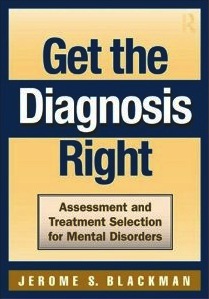
Once I understand your problems and have obtained necessary information, I should be able to explain your diagnosis and make recommendations about the type of treatment required, if any (cf: Get The Diagnosis Right: Assessment and Treatment for Mental Disorders). If you have questions about your children's (or grandchildren's) development or would like advice about management of children (and/or stepchildren), I should be able to give you some guidance.
Psychotherapy and Psychoanalysis
If you are suffering primarily from a conflict-based disorder, psychodynamic psychotherapy or psychoanalysis is usually indicated. Usually, people opt for a few sessions to begin, which may be sufficient. If more work is required, I generally see patients at a frequency of once/week up to four times/week, depending on what is necessary. If psychotropic medication is indicated, I may prescribe this for the patient, as well.
Fees for Consultations and Therapy
Consultation fees and fees for therapeutic sessions are billed directly to patients. If you would like to file for insurance reimbursement, I will help with any forms necessary at no additional charge.
Psychiatric Expert Services I am also available for expert psychiatric opinion in selected civil litigation and Workers’ Compensation cases. Arrangements for these specialized evaluations must be made through the attorney or agency involved. These cases require a specific set of parameters contained in a contract which must be signed by the attorney. (I no longer provide expert opinions in child abuse, custody, and criminal matters.)